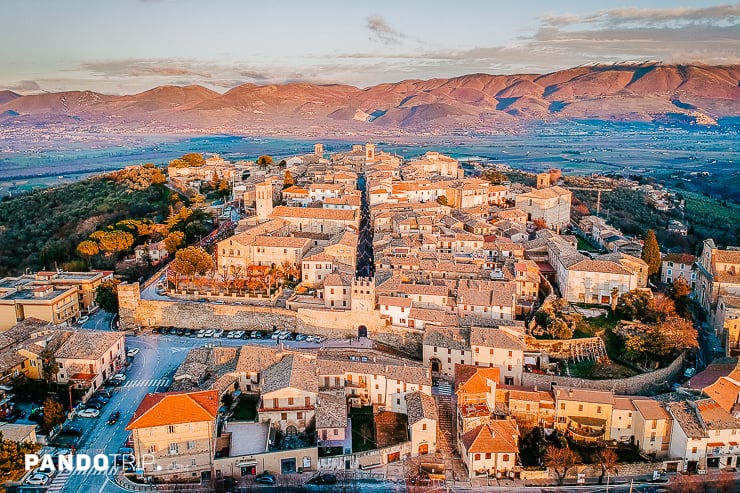
11. Montefalco, Umbria
Population – 5,625
Montefalco is an Italian mountain town around a hundred and fifty kilometers north of Rome that has become renowned for its wine culture and pristinely maintained historic buildings. Set out to explore Montefalco and you’ll come across buildings like the 13th century Palazzo Comunale that look so new they could have been built yesterday.
Wine has been an integral part of Montefalco’s culture since medieval times and it’s here they produce wine from Sagrantino grapes, a native variety almost unique to the Umbria region of Italy. Montefalco is a must visit for all wine connoisseurs as is hiking or cycling the Sagrantino wine route through the vineyards and olive groves. Do that and you’ll discover the real Italy.
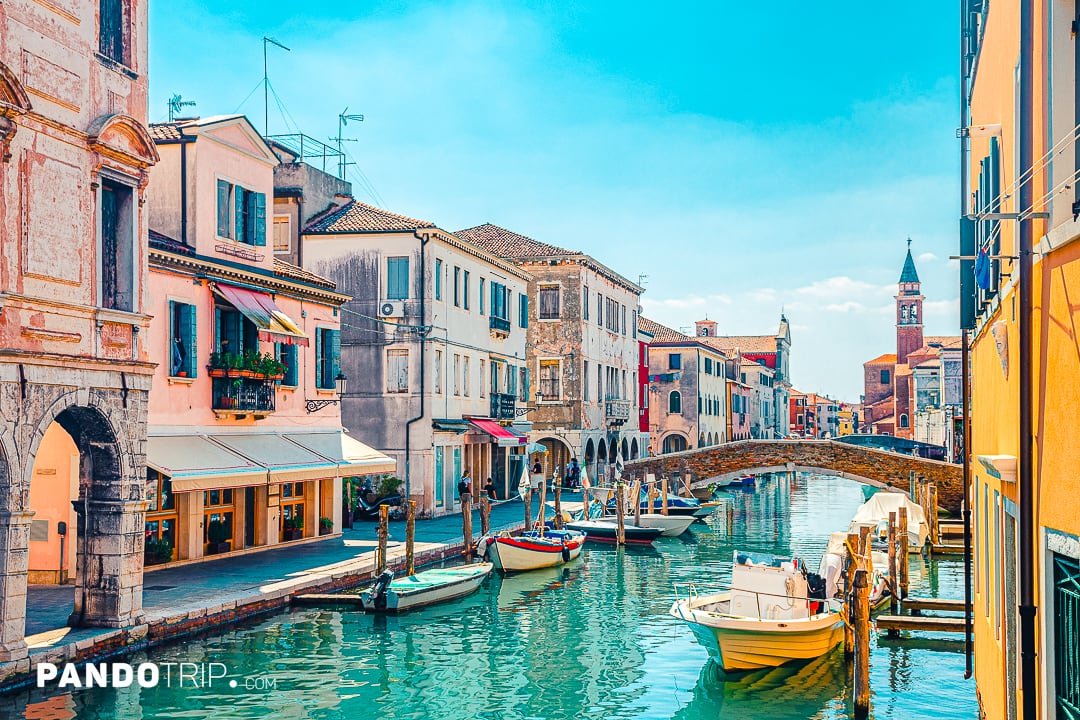
12. Chioggia, Veneta
Population – 49,750
Imagine Venice in miniature and you could be imagining Chioggia, a coastal town around fifty kilometers south of the famous City of Canals. Chioggia is located on an island completely surrounded by the Lagoon of Venice and intersected by several canals.
Cross over the causeway that connects Chioggia to the mainland and you’ll be in a town that’s retained all of its Italian charm. Wander down the main street, the Corso Garibaldi then head for the harbor. There you can eat fresh fish on a waterfront where there are more fishing boats bobbing at anchor than gondolas waiting to take tourists for a ride.
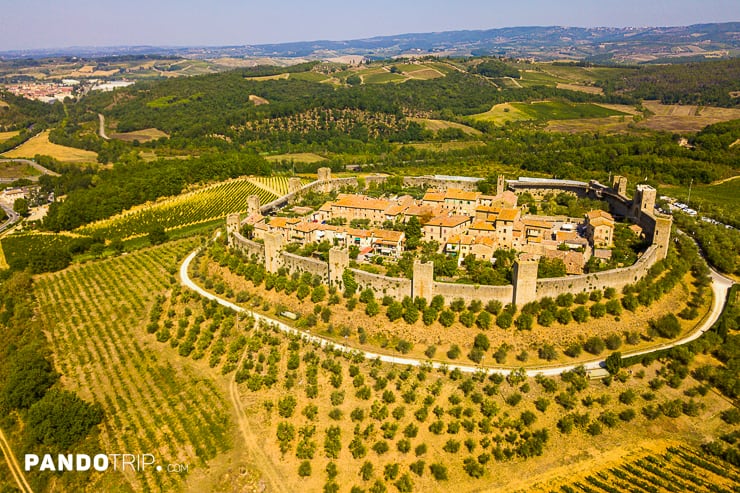
13. Monteriggioni, Tuscany
Population – 9,600
Monteriggioni is a medieval town in the Tuscany region of the country, about sixty kilometers south of Florence, and one that isn’t just visited by avid historians. After the town was featured in Assassin’s Creed II and Assassin’s Creed Brotherhood fans of the games head there too to see the digital become reality.
Built by the Sienese as a fortification during the 13th century war against Florence, Monteriggioni sits on a hilltop and is totally encapsulated by a high stone wall. Very little has changed there over the centuries and the houses built by the Tuscan nobles still line the streets and piazzas. See aerial photographs of Monteriggioni and you’ll begin to realize just how well conserved this medieval Italian town really is. When you do, you’ll begin to wonder why it isn’t a UNESCO World Heritage Site.
14. Vernazza, Cinque Terre
Population – 1000
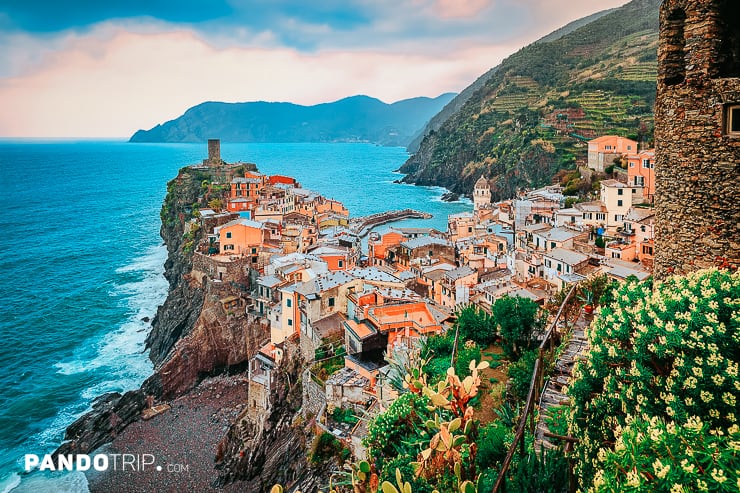
Vernazza is probably the most outstanding of the five villages that make up Cinque Terre. In Vernazza the colorful houses are stacked tight against the cliffs that encircle the sheltered bay at their base and overlooked by the, somewhat gloomy, tower of the Doria Castle ruins.
Vernazza is a village that’s been in existence, in one form or another, since the late 11th century. That existence has often been precarious. In bygone days, the village suffered raids from pirates, and in modern times, extensive damage from landslides. So far, it’s still holding strong, but make sure you go to see it as you never know what looming catastrophe might finally cause its demise.
15. Portofino, Italian Riviera
Population – 425
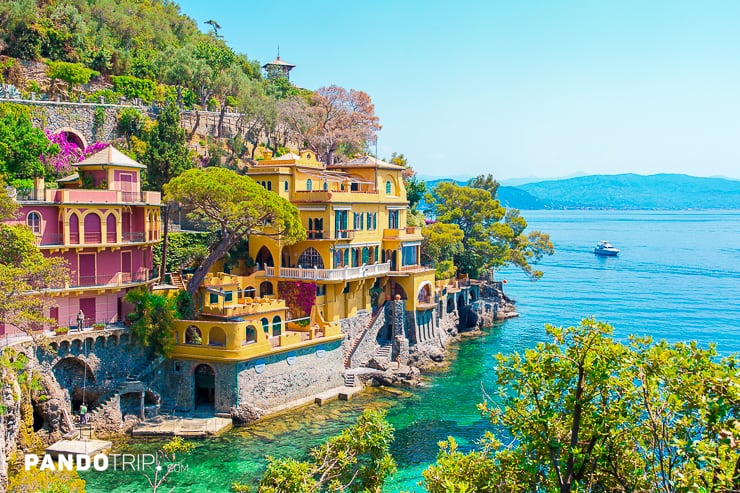
Portofino is a picture-postcard-perfect fishing village on the Italian Riviera and if you’re staying in nearby Genoa, a place you won’t want to miss visiting. The village curves around a small bay and is fronted by a sandy beach lapped by the gentle waves of the Ligurian Sea.
While this may be an Italian fishing village, it’s not just blue and white fishing boats that get moored here. Portofino attracts the wealthy and is a popular anchoring point for those who love to sail the Mediterranean in a class of boat called super-yachts. It’s an unusual contrast, but one that’s worth going out of your way to see.
16. St Magdalena, Dolomites
Population – 370
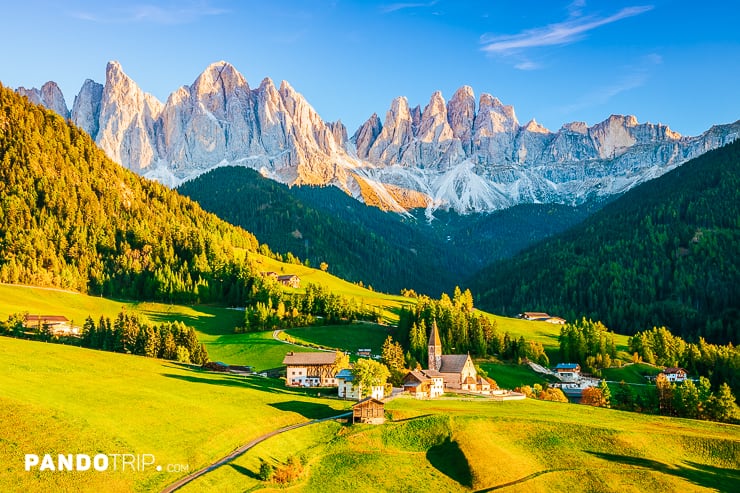
St Magdalena is a remote mountain village in Italy that’s tucked away at an altitude of over one-thousand three hundred meters in the South Tyrol in the north of the country. Closer to the Austrian border than it is to Venice, St Magdalena is situated in the Val di Funes and surrounded by some of the most dramatic scenery in Italy.
The craggy peaks of the Dolomite Mountains rise up behind St Magdalena like the spires of a Gothic cathedral. If Antoni Gaudi had needed natural inspiration for the Sagrada Familia, he would have found it here. For hiking in pollution free air during the spring and summer or for cross-country skiing in winter, it’s unbeatable.
17. Atrani, Amalfi Coast
Population – 860
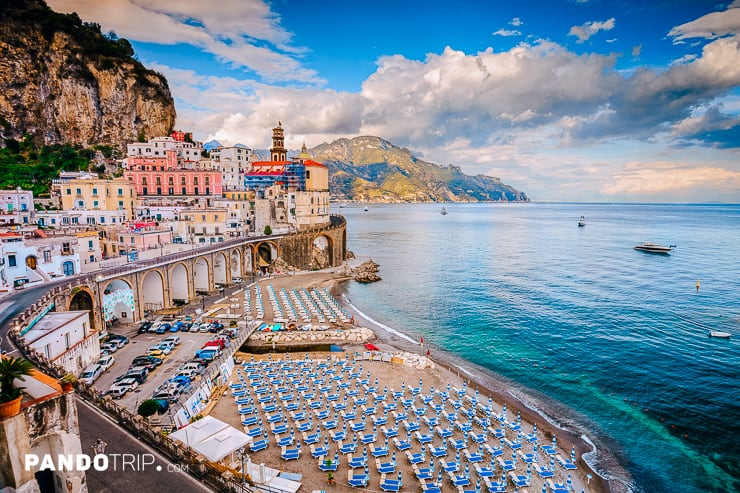
Atrani is one of the towns on the Amalfi coast of Italy that still, pretty much, remains undiscovered by mass tourism. An hour’s drive south of Naples, sea-facing and backed by stunning white limestone cliffs, Atrani is a true gem of a place that’s overloaded with character.
From the Piazza Umberto, the town square, to the seafront and beach, Atrani is one hundred percent Italian. Here you can soak yourself in an Italian seaside resort atmosphere that has nothing to do with international travelers. These days that’s a rare thing so make the most of it.
18. Erice, Sicily
Population – 28,000
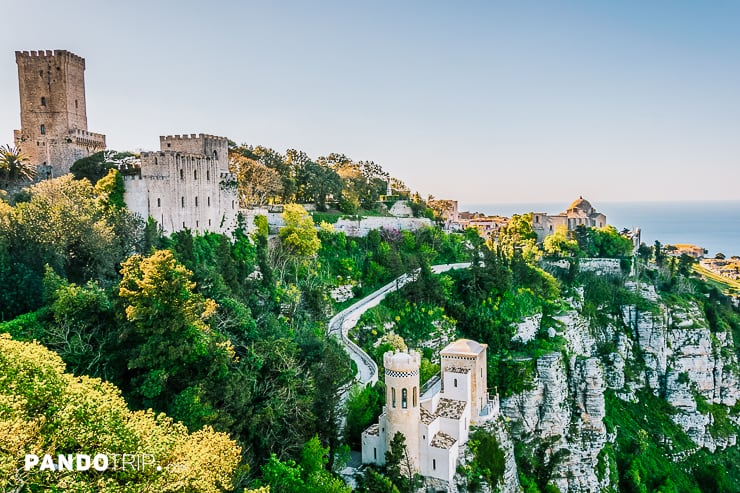
Mountain towns in Italy don’t get much more medieval than Erice on the island of Sicily. Erice has spread out like a cloak around the side of Mount Erice and is overlooked by the forbidding Castle Venere.
While lower parts of the town are more modern, Erice’s historic nucleus,where stone buildings line dark, and narrow cobbled streets, is pretty much as it was back in the 12th century. Don’t skip heading up to the heights of the castle walls to look out over the Sicilian countryside from the Erice viewpoint. You’ll feel just like a knight of old did when watching for approaching marauders.
19. Castelmezzano, Basilicata
Population – 790
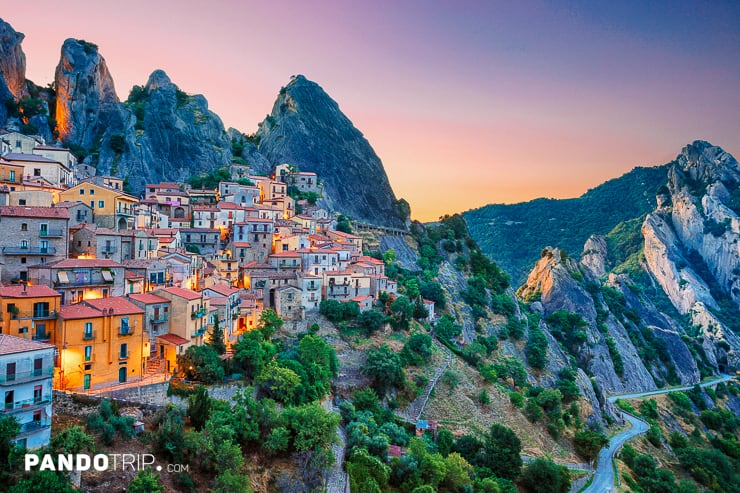
Castelmezzano is another medieval hillside village that was built on a vantage point to serve as a fortress against attack. Today, it’s a quieter and more peaceful place adorning the Italian countryside and one that can rightfully lay claim to being one of the prettiest villages in Italy.
Castelmezzano occupies a relatively remote location in the Valley of Basento below the stark gray peaks of the Dolomiti Lucane Mountains. The closest city is Bari which is a hundred and fifty kilometers to the east. It’s the perfect place to escape to when you want to combine sightseeing with some exciting hiking.
20. Pitigliano, Tuscany
Population – 3,795
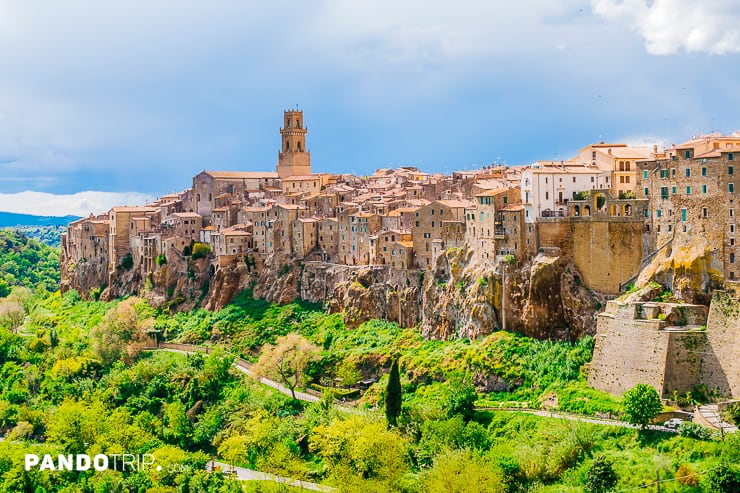
Pitigliano is an imposing town built on top of a volcanic butte that rises over three-hundred meters above the Tuscany landscape. Originally inhabited by an ancient civilisation known as the Etruscans, then by the Romans, Pitigliano is rich in history.
Pitigliano has historically been known as Little Jerusalem, not because of any physical resemblance to the holy city, but because this town was a refuge for Jewish people both in the 16th century and the 20th. One of the town’s main points of interest is the Jewish ghetto and synagogue which date from the earlier era of persecution.
21. Cefalù, Sicily
Population – 14,300
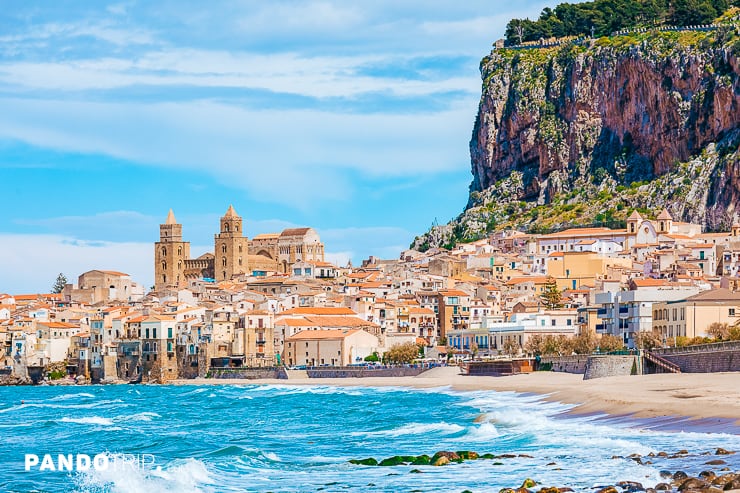
Cefalù, on the island of Sicily, is a town that clings to the coastal cliffs like a barnacle to a ship’s hull. This town is dominated, not by its twin-turreted Norman cathedral, but by the immense buttress of rock which rises behind it. It’s impressive to say the least.
The buttress is known as the Promontory of Hercules and on top of it is a 9th century BC temple dedicated to the goddess, Diana. Of interest in the town itself are the stone steps leading to an ancient wash house which the womenfolk of Cefalù have used for centuries to do the family laundry.
22. Bosa, Sardinia
Population – 7,900
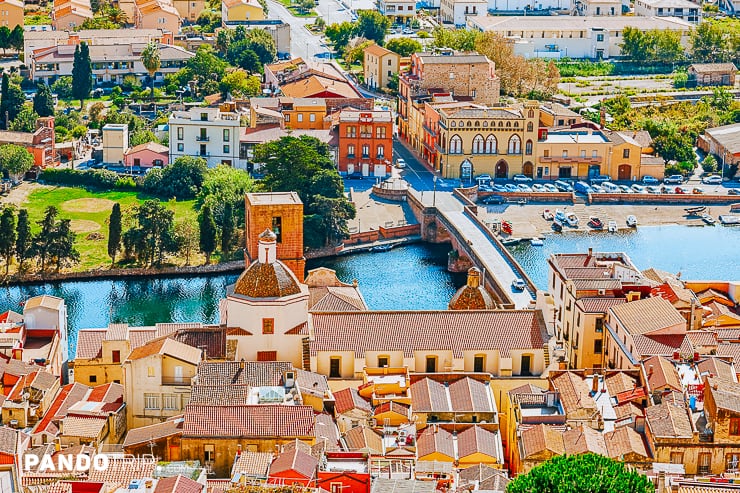
Bosa on the Italian island of Sardinia has to be one of the most colorful towns in all of Italy. There’s not one house there that’s not daubed in an eye-catching hue that seems to get brighter the sunnier it is.
Bosa is located on Sardinia’s northwest coast around two hours drive north from the island’s capital, Cagliari and occupies terrains on both banks of the River Temo. Bosa’s main attractions are its historic district full of winding streets, the 12th century Malaspina Castle and the Malvasia wine produced from the vineyards around the town.
23. Sorano, Tuscany
Population – 3,380
Ask a child to sketch a medieval mountain town and they’d probably come up with something that looked like Sorano. Sorano is a town where the gray, square-shaped stone houses rise tier upon tier against the hillside. It may not be the prettiest medieval town in Italy, but it is an interesting one.
Sorano is in many ways similar to Pitigliano and has a history that dates back to the time of the Etruscans. Of architectural interest here are the two gates,the Porta di Sopra and the Porta dei Merli, that grant access to the historic center, and the Orsini Fortress which houses a museum.

24. Varenna, Lake Como
Population – 800
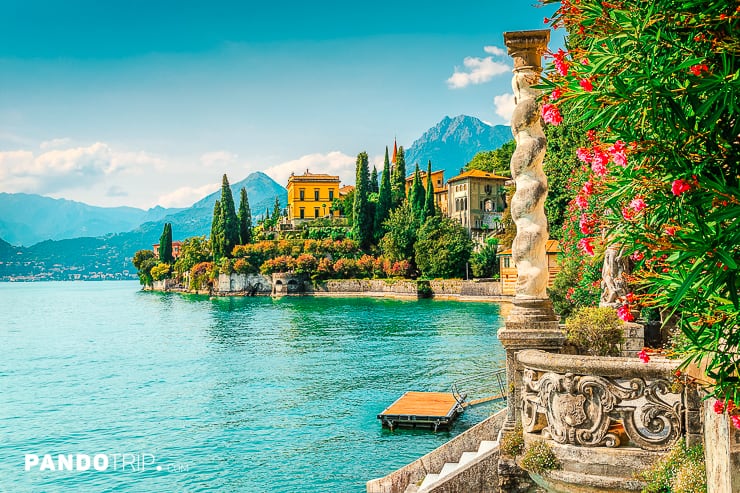
Varenna is a mountain town in Italy in one of the most idyllic settings imaginable. Located on the eastern shoreline of Lake Como in the very north of the country, Varenna is closer to the Swiss border than it is to Milan, the nearest large Italian city.
With Lake Como in front and the peaks of the alps rising behind it, Varenna easily surpasses any scenic description in existence. If you can manage to tear yourself away from the lakefront, a hike up to the Castello di Vezio will prove to be rewarding.
25. Gallipoli, Apulia
Population – 31,850
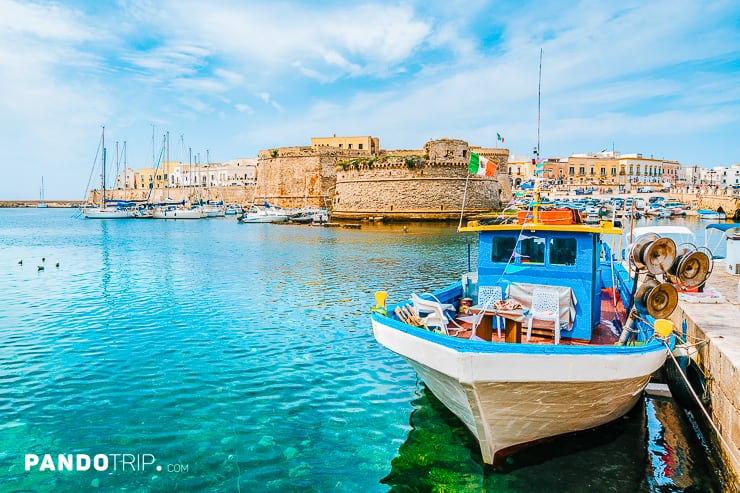
Gallipoli is a large coastal town in the south of Italy that occupies part of the mainland and an island just offshore which can be accessed via a 16th century-built bridge.The island area is where the town’s historic district is located. Explore there and you’ll find an immense 14th century fortress and a huge 17th century Baroque cathedral. Even if you speak fluent Italian, you might not understand everything that’s said here as it’s one of the few places which continue to use a Greek-derived dialect known as Griko.

Comments (1)